Flavors That Change by Temperature in a Lab in Barcelona
Explore how temperature influences flavors in a cutting-edge Barcelona lab, unlocking new culinary dimensions.
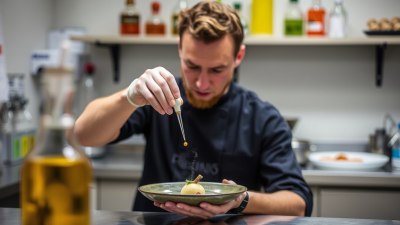
Image created with Flux Schnell
In the vibrant culinary scene of Barcelona, innovative techniques and scientific advancements are continually reshaping the landscape of gastronomy. One of the most intriguing phenomena observed in the world of flavor is how temperature significantly impacts taste perception. Through rigorous experimentation in specialized labs, chefs and food scientists are uncovering how varying temperatures can transform flavors, offering consumers a multi-sensory experience. This exploration not only enhances dining experiences but also broadens the understanding of taste itself.
The Science Behind Taste and Temperature
Taste is primarily determined by the interaction of flavor compounds with taste receptors on the tongue. However, temperature plays a crucial role in this process. At different temperatures, the volatility of aromatics—substances that contribute to the aroma of food—varies, affecting how these compounds are perceived by our olfactory system. The molecular changes that occur in flavor compounds at varying temperatures can either amplify or dampen specific flavor notes, leading to a multi-dimensional experience.
Understanding Temperature's Role
Research conducted in Barcelona's culinary labs has demonstrated that serving food at different temperatures can evoke unique flavor profiles from the same ingredient. For example, a tomato served cold might emphasize its fresh and watery characteristics, while the same tomato served warm can enhance its sweetness and umami notes. This discovery offers chefs a new playground for creativity, allowing them to manipulate temperature to enhance or alter the inherent flavors of the ingredients used.
Experimenting with Cold and Hot
In laboratory experiments, culinary scientists have been experimenting with the temperature sensitivity of various ingredients. For instance, ice cream, at its frozen state, provides a sharp, clean taste of the flavor used (like vanilla or chocolate). However, as it melts and warms, deeper notes emerge, and the texture changes, leading to a more complex flavor experience. Such transformations play a crucial role in how desserts are designed, as chefs increasingly experiment with temperature to showcase the evolution of flavors.
Flavor Pairing and Temperature
Culinary experts suggest that the pairing of flavors can also be influenced by temperature. Certain ingredients might pair well when chilled, while their flavor compatibility changes at warmer temperatures. For instance, fruits like pears are often paired with cheese or nuts in a cold dish to highlight their crispness and acidity. However, when roasted and served warm, pears offer a caramelized, sweeter flavor that can pair more harmoniously with richer, more savory components.
Case Studies from Barcelona
Barcelona’s culinary labs are home to numerous case studies that illustrate these principles in action. One notable experiment involved the use of herbs infused in oils at varying temperatures. Each oil was infused at cold, room, and heated temperatures to showcase how the extraction of flavor compounds altered depending on heat application. The findings elucidated that certain herbs, including basil and rosemary, released varying notes—some sweeter and more aromatic at higher temperatures, while displaying fresher, more herbal qualities when infused cold.
Embracing Technology in Flavor Exploration
This exploration of flavors and temperature is not solely the domain of traditional chefs anymore. With the rise of molecular gastronomy, chefs are embracing technology to finely tune the temperature of food at every stage of preparation. Sous-vide cooking, for example, allows for precise temperature control during cooking processes, ensuring that flavors develop optimally without being masked or altered unexpectedly by high heat. Such advances allow chefs to design immersive dining experiences that invite experimentation.
The Future of Temperature-Based Flavor Design
As the boundaries of culinary creativity continue to expand, the future of temperature-based flavor design is poised for exciting breakthroughs. Researchers in Barcelona predict that the continued integration of technology, such as artificial intelligence and sensory analysis, will further enhance chefs' ability to experiment with temperature and flavor combinations. This could lead to novel dining experiences, pushing the limits of culinary traditions.
Building Consumer Awareness
With the increasing emphasis on the connection between temperature and flavor, there's a growing movement to educate consumers about these dynamics. Chefs in Barcelona and beyond are beginning to incorporate temperature as a key factor in their menu descriptions, inviting diners to consider how the temperature of each dish affects its flavor profile. Such transparency not only enhances the dining experience but also fosters a deeper appreciation for the intricate science behind food.
A New Culinary Paradigm
Flavors that change by temperature open up a new realm of sensory exploration in the culinary field. As chefs and scientists alike delve into the relationship between temperature and flavor, they are rewriting the rules of flavor design and dining experiences in labs across Barcelona. The potential for innovation is vast, inspiring a new generation of culinary experimentation that blurs the lines between science and art. As we continue to explore this intriguing dimension of flavor, one thing is certain—the future of dining holds exciting possibilities.