Following Mold Patterns Through the Old Baths of Budapest
Explore the unique mold patterns in Budapest's historic baths, revealing stories of culture and history.
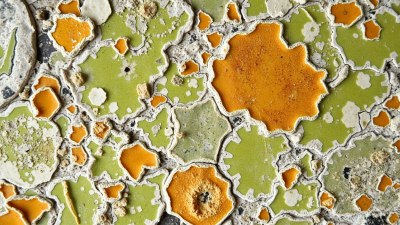
Image created with Flux Schnell
Budapest, a city renowned for its stunning architecture and thermal baths, holds a treasure trove of cultural history within the walls of its old baths. These baths are not just places for relaxation and rejuvenation; they are living monuments to the past, reflecting the city's rich heritage and the intricate stories embedded in their very walls. As we explore the mold patterns that have developed in these baths over the years, we uncover a unique intersection of nature, history, and art. The mold patterns that appear in these spaces are not merely signs of decay; they represent a fascinating narrative of time, environment, and the human experience. These patterns tell a story of how nature claims back spaces inhabited by humans, and how culture intertwines with the organic processes of the environment.
Budapest's thermal baths, especially those dating back to the Ottoman era and earlier, have long captivated the imagination of visitors and locals alike. The sprawl of mineral-rich waters that flow beneath the city has drawn people for centuries seeking solace, healing, and a place to congregate. Each of these baths, from the famous Széchenyi Baths to the lesser-known Rudas and Király Baths, has its own distinctive architecture and historical significance, but all share a common companion: mold. The patterns of mold that have formed over time can be viewed as abstract art, rich with texture and shape, telling a story of a space that has endured the test of time.
As we take a closer look at these organic forms, we discover that they are often linked to the environmental conditions within the baths. The high humidity, coupled with the warmth of the thermal waters, creates an ideal environment for mold to thrive. Yet, these conditions also contribute to the unique visual characteristics of each bath. In the Széchenyi Baths, for example, one can find colorful mosaics peeking through the vibrant green and blue mold patterns that cling to the tiled surfaces. The interplay of color and texture tells a story of neglect, nature's resilience, and the passage of time.
In contrast, the Rudas Baths, with their domed ceilings and Ottoman-era architecture, present a different mold narrative. Here, the mold often takes on more complex and intricate forms, reflecting the architectural details around them. The natural growth follows the lines of the stone and tiles, enhancing the beauty of the space while simultaneously speaking to its age. What becomes clear is that mold is not simply an unwanted guest but an artist in its own right, adding depth and character to the historical context of these baths.
Historical Significance of Budapest's Baths
The historical significance of Budapest’s baths cannot be understated. During the Roman Empire, thermal baths were common places for socializing, and this culture continued during the Ottoman occupation from the 16th to the 17th centuries. The Turks built several baths, many of which still exist today. The Király Baths, for example, constructed in the 16th century and currently exhibiting opulent Ottoman influence, also showcases stubborn mold patterns along its stone walls. Some interpret these mold formations as reminders of the many bodies and lives that have come and gone, chronicling the passage of time.
The baths were not only places for bathing but also centers for social interaction, health, and wellness. In the centuries that have passed since their construction, these baths have seen significant historical events unfold, from royal gatherings to local cultural rituals. The decorative mold that emerges in these locations serves as an unforeseen testament to the longevity and resilience of these spaces amidst the ever-changing dynamics of urban life.
Mold as a Natural Phenomenon
Understanding the science behind mold is integral to appreciating its presence in Budapest's baths. Mold is a type of fungus that thrives in moist, warm environments. The presence of mold in historic buildings often indicates more than just a damp issue; it can also signify the materials and methods used in construction. Many of the baths are built from porous stone and tile, which creates an interplay between the structure and the surrounding environment. As moisture seeps through these materials, mold can take root, creating patterns that vary in color, size, and texture.
Such mold patterns can exhibit an array of colors from vibrant greens and blacks to subtle grays and whites, each shade revealing the specific environmental conditions present. For instance, the lighter-colored molds generally thrive in drier conditions while darker molds flourish in consistently damp areas. In places like the Széchenyi Baths, where large pools of water are frequently utilized, one can see how moisture interacts with the unique architectural styles, leading to diverse mold formations that seem to dance along the edges of the tiles.
The Artistry in Mold Patterns
To the unsuspecting visitor, mold may be considered a nuisance; however, to those who look closer, it can reveal an artistry that is unmatched. The formations of mold seem to embody impressions of life and decay. In some areas, they create patterns reminiscent of landscapes, clouds, or flowing rivers, blurring the lines between nature and architecture. The Király Baths, with its dimly lit corridors, showcases impressive visual art composed entirely by nature, as mold stretches its tendrils across stone in fluid, organic patterns. By examining these mold paintings, we gain insight into the conditions that have shaped the baths' environments and, in turn, their historical significance.
Preservation Efforts
While appreciating the beauty of mold patterns, it is essential to consider the preservation efforts surrounding these historic baths. Mold can potentially compromise the structural integrity of the buildings if left unchecked. Local authorities and restoration experts are actively engaged in maintaining the balance between protecting the historical aspects of these baths while also addressing mold issues. Techniques such as controlled cleaning processes are adopted, utilizing gentle approaches that remove mold while respecting the architectural integrity of the site.
Increasing awareness about mold preservation can improve the understanding of the relationship between natural elements and historical architectures; helping to protect these treasures for future generations. While complete eradication of mold may not be feasible, allowing some patterns to remain can serve as a beneficial reminder of nature's role in our built environments and the importance of preserving history.
Following mold patterns through the old baths of Budapest offers a unique perspective on the intersection of nature, history, and art. The mold that forms in these historical spaces is both a story of decay and regeneration, a reminder of the countless visitors who have participated in the rich tradition of bathing in the thermal waters. It is through the lens of these organic patterns that we can appreciate not only the physical structure of the baths but also the cultural and historical narratives they represent. As we continue to explore these intricate ecosystems of mold and architecture, we foster a greater understanding of how the passage of time and the persistence of nature can coexist within our urban landscapes.