Searching for Camelot in the Shadows of Tintagel
Explore the legendary tales of Camelot and the historical significance of Tintagel Castle.
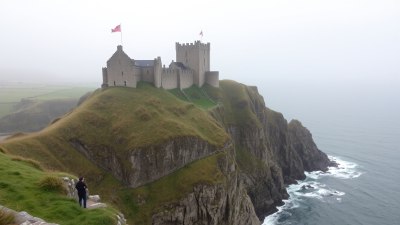
Image created with Flux Schnell
In the misty landscapes of Cornwall, the story of Camelot echoes through time, invoking images of noble knights, gallant quests, and the eternal search for the elusive King Arthur. Tintagel Castle, perched dramatically on the cliffs overlooking the Atlantic Ocean, is deeply intertwined with these legends. This article delves into the history, myths, and cultural significance of Tintagel, exploring its connection to Camelot and British folklore.
Legend has it that the great King Arthur was born at Tintagel, a fabled site steeped in romance and mystery. Ancient texts, such as Geoffrey of Monmouth's 12th-century writings, depict Tintagel as a majestic fortress where Arthur's mother, Igraine, conceived the future king with Uther Pendragon. This legendary conception ties the castle not only to Arthur’s beginnings but also portrays it as a symbol of power and magic, setting the stage for his extraordinary life.
Visiting Tintagel today, one cannot help but sense the echoes of history that resonate through the craggy ruins and stunning coastal scenery. The castle itself, now a partially restored site, stands as a testament to the architectural achievements of the medieval period. Its strategic location made it a vital stronghold for defending against invaders and showcasing power over the surrounding regions. The ruins are not only visually striking but also offer insight into the tumultuous past of the area and its significance in Arthurian lore.
The Journey to Tintagel
Reaching Tintagel is part of the adventure. Nestled along the coast, it is accessible via winding roads that offer breathtaking views of the cliffs and sea. As travelers make their way to the castle, they are enveloped by the natural beauty of Cornwall’s rugged coastline, an area steeped in legend. Many arrive not just for the castle but to experience the tales of Arthur and the enchanting settings that breathe life into the myths.
Historical Significance
Tintagel was not merely a setting for Arthurian legend; it was a significant settlement during the early medieval period. Archaeological excavations have uncovered evidence of a thriving community that existed as early as the 5th century. Artifacts such as pottery, coins, and remnants of buildings suggest that Tintagel was a pivotal site for trade and politics, possibly serving as a royal seat or a trading post with links to Brittany and beyond.
From the 12th century onwards, Tintagel became intertwined with the Arthurian legends, largely due to Geoffrey of Monmouth’s “Historia Regum Britanniae,” where he popularized the story of Arthur's birth and the grandeur of Tintagel. This work fueled the imagination of poets and storytellers throughout the centuries, culminating in a mythos that still captures the public's imagination today.
Myth vs. Reality
While the legends of Camelot have been romanticized over centuries, the historical foundation of Tintagel cannot be overlooked. The narrative often blurs the line between myth and reality, inviting both cynicism and curiosity among historians and enthusiasts alike. Some scholars argue that the legendary aspects of Arthur’s reign were exaggerated or fabricated, while others believe that there may have been a historical figure who inspired the tales of Arthur.
The story of Tintagel and Arthur may be rooted in truth, but it also evolved as storytellers layered fantastic details upon it. This interplay of fact and fiction invites exploration, urging visitors to ponder the nature of storytelling itself. How have the legends transformed over time? What does that say about our cultural identity and the yearning for heroes and mythical figures?
Modern Interpretations
In contemporary culture, the myth of King Arthur and his realm remains prevalent. Literary adaptations, films, and television shows have revived interest in the legends, showcasing Tintagel as a focal point for these narratives. From T.H. White's “The Once and Future King” to modern cinematic adaptations like “King Arthur: Legend of the Sword,” the tale continues to inspire artists and creators. These reinterpretations invite audiences to engage with the archetypes of heroism and adventure, reminding us of the timeless allure of Camelot.
However, it is essential to approach these modern renditions with a critical eye, acknowledging how storytelling can shape cultural memory. The narratives we construct around figures like Arthur serve to reflect our values and aspirations, often portraying ideals of chivalry and honor amid the chaos of human existence. Through tales of quests and battles, they provide a framework for understanding virtues and moral dilemmas that resonate throughout time.
Natural Beauty and Visitor Experience
Visiting Tintagel is not merely an exploration of historical ruins; it is an experience enriched by the natural landscape that surrounds the castle. The dramatic cliffs, crashing waves, and sweeping vistas create a sense of both majesty and solitude, inviting contemplation of the legends that linger in the air. Many find themselves captivated by the beauty of the site, deepening their appreciation for the connection between nature and storytelling.
Visitors can engage with the site through tours, exhibitions, and interactive experiences that delve into the history of Tintagel and its associated myths. These opportunities allow for a more profound understanding of the cultural significance of the locale, bridging the gap between the past and present. Walks along the coastal paths, guided by knowledgeable historians, offer insight into the folklore while also enticing the senses with the sights and sounds of nature.
Comparative Mythologies
The narrative of King Arthur transcends geographical boundaries, finding parallels in other cultures' mythologies. Echoes of similar heroic sagas can be found in various traditions, from the legends of Hercules in Greek mythology to the Norse tales of Odin and Thor. These stories consistently revolve around themes of heroism, triumph over adversity, and the quest for identity and legacy, reflecting universal human experiences.
By examining these comparative mythologies, one can unravel the shared human condition reflected in the tales of heroes and kings. They evoke something deeply ingrained in our psyche—the aspiration to rise above challenges, seek justice, and leave a lasting mark on the world. Camelot and Tintagel embody these ideals, offering a symbolic fortress where the past and present coexist.
The search for Camelot in the shadows of Tintagel is less about unearthing physical evidence and more about engaging with the stories that resonate through time. As visitors wander the ruins and contemplate the myths, they enter a realm where history and fiction intertwine, crafting a narrative that is unique to each individual. The enduring fascination with King Arthur and the legends associated with Tintagel are a testament to the powerful legacy of storytelling—a bridge between cultures and generations that transcends the confines of time and space.
Ultimately, searching for Camelot invites us to explore not only the legendary aspects of the past but also the deeper meanings embedded in these tales. As we journey through life, the stories we tell and the legends we create are what give us a sense of purpose and identity, echoing in the winds of history from the cliffs of Tintagel.