The Arch of Triumph in North Korea Is Grand, But Not Proud
Explore the significance of North Korea's Arch of Triumph, its historical context, and the symbolism behind its grandeur.
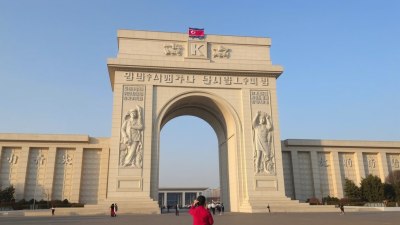
Image created with Flux Schnell
The Arch of Triumph in Pyongyang, North Korea, stands as one of the country’s most iconic landmarks, a colossal structure that celebrates the Korean resistance against Japanese rule. Erected in 1982 to commemorate the 70th anniversary of Kim Il-sung’s birth, it is regarded as the largest triumphal arch in the world. However, beneath its monumental façade lies a complex narrative that intertwines national pride with a sense of somber reflection on the past.
The arch itself is a masterpiece of architectural design, towering at 60 meters high and spanning 50 meters wide, constructed primarily of white granite and featuring intricate reliefs and inscriptions. These decorations tell the story of Korea’s struggles and triumphs over foreign domination, glorifying the leadership of Kim Il-sung and the sacrifices made by soldiers and civilians alike. The sheer size and imposing presence of the arch encapsulate the intended message of strength and resilience. Yet, traveling through this grand monument offers more than just a visually striking experience; it provides an insight into the psyche of a nation shaped by decades of isolation and propaganda.
Historical Significance
While the Arch of Triumph honors the Korean War, it also serves as a reminder of the Japanese occupation that lasted from 1910 to 1945. This period of oppression left a profound impact on Korean society and is a pivotal chapter in the collective memory of the nation. The monument acknowledges this painful history while simultaneously reinforcing the narrative of liberation and rejuvenation guided by the leadership of Kim Il-sung. Despite its status as a source of national pride, the arch raises questions about the cost of such pride and the sacrifices that have been made to achieve it.
In the context of North Korean ideology, the arch represents not only a tribute to past struggles but also a focal point of national identity. It is often depicted in state-sponsored media and includes themes of patriotism, emphasizing loyalty to the regime and the achievements attributed to its leaders. This intertwining of historical memory and political propaganda is essential for understanding modern North Korea, where the past is carefully curated to serve contemporary narratives.
Architectural Features
As one approaches the Arch of Triumph, the intricacies of its design become apparent. The arch is adorned with bronze statues, detailed carvings, and inscriptions in both Korean and Russian, which highlight the contributions of the Soviet Union during World War II. The use of bronze symbolizes permanence and valor, while the large relief panels capture crucial moments in the Korean resistance. From the depiction of heroic soldiers to the portrayal of civilian sacrifices, these elements evoke a sense of historical reverence.
The arch reflects various architectural influences, drawing from traditional Korean motifs and Soviet monumentalism, creating a unique fusion that aligns with North Korea’s identity. Standing at a major intersection in Pyongyang, the arch serves as a gateway to the city and a landmark for both local citizens and visitors, often featuring prominently in national parades, celebrations, and state events.
Symbolism and Psychological Impact
The symbolism behind the Arch of Triumph also delves into the psychological impact it has on the North Korean populace. For many citizens, the arch serves as a daily reminder of their country’s struggles and victories, instilling a sense of duty and nationalism. However, this same monument may evoke a feeling of oppression as it embodies the weight of history and expectation. It is a reminder of the sacrifices paid, but also the limitations placed upon individual freedom and expression in a society governed by strict controls.
Furthermore, the arch’s prominence in the landscape of Pyongyang can be viewed as a reflection of the regime’s priorities—promoting state power and suppressing dissent. For visitors, it may provide a picturesque photo opportunity; for locals, it often represents an imposed sense of pride amidst the harsh realities of daily life. The heavy layer of propaganda surrounding the arch complicates its status as a symbol of national pride. The message of unity and strength can easily blur with the grim oppression experienced in a totalitarian state.
Tourism and Foreign Perception
In the realm of tourism, the Arch of Triumph is one of the most photographed sites in North Korea. Tourists flock to the arch, often guided through a carefully curated experience that highlights the supposed benevolence of the regime and its achievements. The state-run tours ensure that foreigners receive a version of North Korean history that aligns with official narratives, reinforcing the grandeur of monuments like the Arch of Triumph. However, what tourists may not grasp fully is the duality of the arch's representation—while for some it embodies a proud national history, for others it symbolizes an oppressive regime that utilizes public monuments for propaganda purposes.
The contrast between the actual experience of North Koreans and the fabricated image presented to tourists creates wide divergence in how the arch is perceived internationally. Many outsiders may leave North Korea impressed by the grandeur of its monuments, yet remain oblivious to the underlying complexities and the realities faced by residents in this isolated state.
Thus, while the Arch of Triumph in North Korea is undeniably grand in stature and design, it is not devoid of a profound sense of contradiction. Rather than serving solely as a proud monument to freedom, it encapsulates the complexities of history, identity, and state-imposed nationalism. The arch stands tall, a marvel of construction that tells a narrative shaped by war, oppression, and the quest for pride. As North Korea continues its march through history, the Arch of Triumph will remain a poignant symbol—a site where the tales of heroism are celebrated, yet overshadowed by waves of somber reality and unyielding control.