The Gateway Arch in the United States Is a Portal to Nowhere in Particular
Explore the symbolism and history of the Gateway Arch, a monument that represents both triumph and a disconnect in U.S. culture.
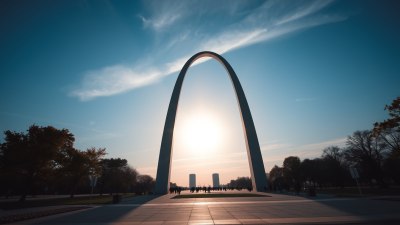
The Gateway Arch, standing tall at 630 feet, represents a significant piece of American history and architecture. As a monument, it is not merely a structure but a symbol of progress and the westward expansion of the United States. However, beyond its grandeur, the question arises: what does the Gateway Arch truly signify? The arch, designed by architect Eero Saarinen, was completed in 1965 and is situated in St. Louis, Missouri. It was built to honor Thomas Jefferson and his role in the westward expansion of the United States following the Louisiana Purchase. While many see it as a portal celebrating newfound territories, others critique its existence as a 'portal to nowhere.' This duality adds layers to the understanding of the arch.
It’s important to first acknowledge the historical context in which the Gateway Arch was conceived. The early 19th century was a period marked by exploration and a surge in American national identity. The Louisiana Purchase in 1803 doubled the land size of the United States and set the foundation for the Manifest Destiny ideology, which proposed that it was the nation's god-given right to expand across the continent. The Arcade at the entrance of the arch features a mural by artist Thomas Hart Benton, depicting various aspects of American history, including pioneers and Native Americans. This mural further fragments the narrative of who exactly the arch is meant to honor.
For many local residents and visitors, the Gateway Arch is a point of pride, representing the essence of St. Louis. The arch attracts millions of tourists each year, drawn by its iconic silhouette against the skyline. Its stainless steel surface reflects the changing light and the ever-shifting emotions of the city. However, the site hasn't been without controversy. Critics argue that the arch fails to encompass the struggles and histories of the people who lived in the region long before its construction. The arch stands as a backdrop to a complex tapestry of social and racial struggles, often marginalized in the broader narrative of American progress.
The Architectural Marvel of the Gateway Arch
Designed by Eero Saarinen, the Gateway Arch is an engineering marvel that utilizes a hyperbolic paraboloid shape, making it both visually striking and structurally sound. The construction was no small feat; it required 900 tons of stainless steel and approximately 43,000 cubic yards of concrete to complete the monument. The arch's design is especially admired for its unique approach to the traditional column-based structures that preceded it. Instead, Saarinen's design reflected the innovation of the era and symbolized a progressive future.
The construction process faced numerous challenges, including labor disputes and fluctuating weather conditions. Despite these setbacks, the arch was completed in 1965 and has since become an iconic representation of America's ability to overcome adversity. However, many argue that the initial concept did not fully take into account the voices and histories of those who were displaced due to urban development surrounding the arch, raising questions about whose stories are being told and whose stories remain silent.
A Portal to Nowhere?
While the Gateway Arch serves as a gateway to the West in a historical sense, critics have aptly pointed out that it can also be viewed as a 'portal to nowhere.' This statement encapsulates the broader feeling of disconnection present in urban life, particularly in post-industrial cities like St. Louis. The arch symbolizes aspirations, yet for many, it also represents a sense of lost opportunities and unfulfilled promises. The urban area surrounding the arch has undergone significant transformations over the decades, sometimes resulting in a disconnect between the monument and the vibrant community that surrounds it.
The notion of the arch as a 'portal to nowhere' resonates with the experiences of individuals who navigate daily struggles in their lives. For residents, the arch can feel like a monument to a bygone era, representing a city that has battled economic decline, increased crime rates, and racial tensions. Ultimately, the arch, while a historic landmark, can simultaneously embody the idea of nostalgia and disappointment; it signifies both the progressive dreams of a young nation and the harsh realities that many face today.
Visitor Experience
Visitors to the arch are treated to an experience that includes a tram ride to the top of the monument. Once at the apex, panoramic views of St. Louis and the Mississippi River offer a breathtaking sight. However, the experience is not just about the view; it also involves an educational journey through the history of the arch and its place in American culture. Interactive exhibits highlight the significance of the arch, yet the experience in itself begs the question: does it fully encapsulate the voices of every story the arch represents?
Moreover, the interpretation of the Gateway Arch has evolved over the years. The arch’s position as an epoch-defining structure is often contrasted with the narrative of displacement for Indigenous peoples and African Americans. The historical aspects, while crucial, might serve to gloss over complex issues of identity and belonging. Instead of being a mere monument, the Gateway Arch stands as an invitation to engage critically with American history — both in terms of achievements and profound failures.
Symbolism in Modern Times
In recent years, the Gateway Arch has managed to become a symbol of resilience, particularly for the community in St. Louis. As urban revitalization projects have taken shape around it, including renewed focus on the riverfront and the cityscape, the arch has stepped into a new role as a beacon of hope and community gathering. Events such as festivals and public art projects have fostered a renewed sense of belonging and connection around the arch.
This transformation demonstrates that while the arch might have roots in a historical narrative of expansion and change, its significance continues to evolve. The arch now serves as a gathering point, a place where diverse communities can come together, share their stories, and redefine what the Gateway Arch means to them. This shift from a 'portal to nowhere' to a place of connection requires acknowledging the tapestry of stories, experiences, and histories that define the region.
Conclusion
The Gateway Arch in St. Louis stands not just as an architectural landmark but as a complex symbol of American identity. It embodies the ambitions and aspirations of a nation, while also recognizing the painful histories that accompany such progress. The phrase 'portal to nowhere' encapsulates the paradox of this monument — a sight of beauty and a reminder of disconnection. As society continues to grapple with the implications of its history, the Gateway Arch remains a significant site for dialogue. Through critical engagement and community collaboration, the arch can transform from a mere monument into a living testament to progress, unity, and the myriad of stories that make up the fabric of American life.
Ultimately, the Gateway Arch may be a portal to nowhere in terms of direction, but it certainly offers portals into the past, present, and future — a reminder that the journey of understanding and reconciliation is ongoing.