The Independence Monument in Senegal Watches the Future Hesitantly
Exploring the significance and implications of the Independence Monument in Senegal and its stance towards the future.
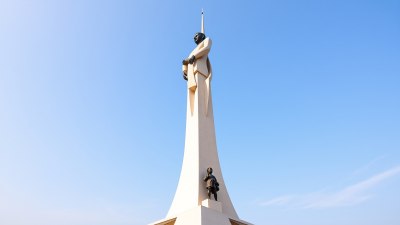
Image created with Flux Schnell
The Independence Monument in Dakar, Senegal, stands not only as a symbol of national pride but also as a witness to the complex journey of a nation navigating the challenges of modernity and globalization. Erected to commemorate Senegal's independence from French colonial rule in 1960, this imposing structure serves as a focal point for civic pride, historical reflection, and social commentary. As Senegal continues to assert its identity in a rapidly evolving world, the monument's gaze towards the future seems to oscillate between hope and uncertainty.
A Historical Perspective
Constructed in 2010, the Independence Monument is a modern architectural feat designed by Senegalese architect Pierre Goudiaby Atepa. The monument portrays a family, with the male figure representing the strength and resilience of the nation, the woman symbolizing progress and the future, and the child embodying hope. This triad encapsulates the spirit of the nation, rooted in a rich history and entwined with aspirations for a better tomorrow.
However, the monument also reflects the historical struggles Senegal faced during and after colonial rule—a narrative filled with sacrifices, resistance, and a quest for self-determination. The monument stands at the center of a city that has witnessed the ebb and flow of political tides, cultural transformations, and economic challenges. As one gazes upon its towering silhouette against the Dakar skyline, it prompts reflection on the journey from colonial oppression to the pursuit of a sovereign identity.
The Cultural Significance
The Independence Monument is not just an architectural marvel; it is steeped in cultural significance. It has become a site of pilgrimage for Senegalese citizens and visitors alike, offering a common ground for collective memory and national unity. The monument is often a backdrop for national celebrations, protests, and gatherings, embodying the collective consciousness of a nation wrestling with its past while striving for a brighter future.
In Senegal, art and culture play pivotal roles in shaping identity and fostering dialogue. The monument serves as a catalyst for discourse surrounding themes of post-colonialism, governance, and social justice. Artists, writers, and social activists frequently reference the monument in their works, using it as a metaphor for national pride and as a canvas depicting the struggles that continue to impact everyday life.
Facing Modern Challenges
As Senegal approaches its 63rd year of independence, the Independence Monument stands witness to various contemporary issues confronting the nation. Economic challenges, urban migration, youth unemployment, and political unrest constitute just a fraction of the complexities wrapped within the fabric of Senegalese society. The youth, who make up a significant portion of the population, are increasingly vocal about their aspirations and frustrations. This generational clash has led to a reassessment of governance, accountability, and national values.
The monument's strategic location near the Atlantic Ocean positions it visually and metaphorically as a barrier against the waves of globalization and socio-economic upheaval. Young Senegalese, navigating a landscape marked by digital influence and the proliferation of social media, use their creativity to voice their dreams for the future. The monument's unmoving presence contrasts sharply with the dynamism of the youth, who are demanding a more inclusive and participatory approach to governance.
Environmental Concerns
Climate change is another looming issue that Senegal contends with, given its coastlines and reliance on agriculture. The Independence Monument’s position overlooking the ocean serves as a reminder that the beauty of nature coexists with pressing environmental challenges, from rising sea levels to deforestation and land degradation. As awareness of environmental sustainability grows, the monument symbolizes the need for Senegal to maintain a delicate balance between development and environmental stewardship. Advocates for ecological preservation argue that the fate of the monument—and, by extension, the nation—depends on sustainable practices that honor both heritage and future generations.
The Role of Governance
Political dynamics ascend as critical factors affecting the monument's interpretation in contemporary discourse. Working democracy has been tested in Senegal, often reflecting citizens' hopes and disappointments. The Independence Monument reminds leaders of their responsibility to uphold the values of freedom, equality, and justice—principles central to Senegal’s independence struggle. Yet, as political tensions gently simmer, the structure’s commanding presence reflects a longing for stability and integrity.
In light of ongoing political discourse, the monument has become an emblem for the fight against corruption and the promotion of transparency. Governance reforms and democratic principles remain paramount to ensure that the monumental aspirations of the past continue to resonate within the present and future. The monument challenges politicians to rise above factionalism to serve the collective interests of all citizens.
A Symbol of Hope
Despite these multifaceted challenges, the Independence Monument stands tall as a symbol of resilience and hope. It provides an anchor for citizens amidst myriad uncertainties. The juxtaposition of the monument’s physical gravity against the backdrop of aspiring young Senegalese creates a tableau of potential that seeks to harness the nation’s cultural richness and resourceful spirit.
In a world where change is the only constant, the monument stands as a testament to the enduring spirit of a nation. It implores citizens to honor the past while envisioning a future, fostering a narrative that encourages collaboration and unity. Within the shadow of the monument, dreams can take flight as new generations strive for progress, equality, and genuine representation.
Engaging the Global Community
As Senegal increasingly engages with the global community, the Independence Monument serves as a conduit for international dialogue. By hosting global events, such as cultural exchanges and conferences, Senegal showcases its rich heritage while making a case for collaboration toward shared challenges like climate change, youth empowerment, and gender equality.
The monument's middle ground allows Senegal to articulate its unique position within the African context, providing insights into the struggles and triumphs experienced since independence. This engagement fosters goodwill and partnerships which can ultimately steer the nation toward sustainable development goals. It exemplifies the power of dialogue in weaving together multiple perspectives, reinforcing the notion that nations are interconnected.
A Vision for the Future
The Independence Monument also becomes a canvas for envisioning a better future. As Senegal strives to carve out its place in the modern world, the monument serves as a poignant reminder that the journey towards achieving aspirations is ongoing. It provokes conversations surrounding innovation, social equity, and cultural revival, ideas which can resonate deeply within a world increasingly defined by diversity.
As Senegal's youth continue to advocate for change and challenge the status quo, the independence movement lives on. The monument becomes a herald of progress, challenging the nation to embrace a collective introspection while actively engaging in reimagining the standard of governance and social justice.
The Independence Monument stands as a testament to Senegal's complex heritage and aspirations for the future. It embodies a duality—a celebration of independence alongside the recognition of ongoing challenges. The monument’s resolute presence invites citizens to reflect on their path while advocating for a future marked by resilience and hope. In an era defined by rapid change, the monument’s significance only deepens, urging all who behold it to unite in the face of adversity and understand that the journey toward progress is collaborative, constant, and essential.