The Sphinx in Egypt Is Still Laughing at Our Questions
Explore the enigma of the Sphinx and its unanswered mysteries that continue to baffle researchers and tourists alike.
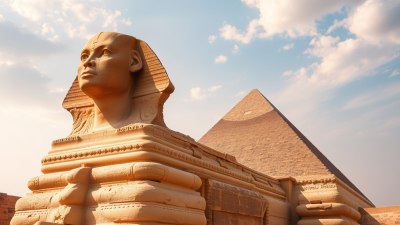
The Great Sphinx of Giza, a monumental limestone statue with the body of a lion and the head of a pharaoh, has been a whisper of wonder and a source of intrigue for thousands of years. Its imposing form stands guard over the Giza Plateau, silently witnessing the passage of time and the evolution of human civilization. Despite its grandeur, the Sphinx presents many unanswered questions, leading many to wonder if it still laughs at those who seek its secrets.
Built during the reign of Pharaoh Khafre (c. 2570 BCE), the Sphinx is thought to be a symbol of strength and wisdom. However, its form is quickly overshadowed by the mysteries surrounding it: Who exactly built it? What was its purpose? Why has it endured the ravages of time? As scholars and enthusiasts alike continue to search for answers, the Sphinx remains a mute companion, the keeper of secrets lost in the sands of time.
Origins and Construction
The origins of the Sphinx are steeped in legend and conjecture. Some of the earliest references to the Sphinx are found in the works of ancient historians and explorers, particularly Herodotus, who wrote about it in the 5th century BCE. Archaeologists suggest that the statue was carved from the Giza limestone plateau and is approximately 66 feet tall and 240 feet long, making it one of the largest and oldest monolithic statues in the world.
Despite its size, questions arise regarding the technology used to create such a masterpiece. In an age where tools were rudimentary, how did ancient Egyptians accomplish such an intricate sculpture? Some researchers postulate the use of copper chisels, which were capable of fine detailing, while others point towards the development of simple levers for moving the massive stone blocks. However, the specific techniques and tools remain largely speculative, adding an additional layer to the Sphinx’s allure.
Symbolism and Purpose
The Sphinx likely served multiple purposes—both ceremonial and protective. As a guardian figure, it is thought to watch over the nearby pyramids, including the Pyramid of Khafre, providing spiritual protection. In Egyptian mythology, the Sphinx was also associated with the sun god Ra. Some interpretations suggest that the lion's body may symbolize the pharaoh's strength and sovereignty, while the human head represents wisdom.
Additionally, it is argued that the Sphinx represented a connection between the divine and the earthly realm. By embodying both human and animalistic traits, it functions as a mediator, bridging the gap between the mortal and the immortal. Consequently, its original function may have encompassed both guarding the tomb and serving as a monument to the pharaoh's divine rule.
Mysteries of Erosion
The Great Sphinx has endured considerable erosion due to natural elements like wind, sand exposure, and even water. This phenomenon raises further questions about the timeline of its creation. Some scholars suggest that the erosion patterns indicate a much older origin, potentially predating the reign of Khafre by thousands of years. If true, this would imply that the Sphinx might have been built during a period of civilization that remains largely unseen in the history books.
In light of such findings, alternative theories have emerged, including debates regarding the Sphinx’s true constructor and purpose. This has led to even more elaborate speculation about what civilization could have existed long before the Egyptians. The erosion narrative not only fuels intrigue but also drives a wedge between traditional archaeological views and the more controversial hypotheses that question the timeframes of human history.
The Hidden Chambers
Among the Sphinx's many mysteries is the existence of hidden chambers beneath its massive body. Recent technological advancements, such as ground-penetrating radar, have suggested that there may be tunnels or chambers connected to the Sphinx. While these may contain burial artifacts or further insights into the construction process, they also fuel conspiracy theories and speculation surrounding ancient knowledge and technology.
The idea of discovering something hidden adds another layer of depth to the enigma. If such chambers exist, they could hold the key to understanding not only the Sphinx's origin but the beliefs and rituals of ancient Egyptian society. However, the prospect of excavation carries risks, as it may lead to damage or lead researchers into dead ends, further emphasizing the Sphinx's undying nature of keeping secrets.
Cultural Impact and Legacy
The Sphinx’s influence extends far beyond the sands of Giza. It has inspired countless works of literature, art, and film, reinforcing its status as an icon of mystery and intrigue. A prime example is its representation in modern pop culture; numerous films, documentaries, and novels have sought to unravel its secrets, showcasing the statue as not only a relic of ancient Egypt but as a symbol of humanity’s relentless pursuit of knowledge.
Cultural fascination with the Sphinx transcends nationalities and eras. Its image is ubiquitous in global art forms, from paintings to sculptures, and it continues to captivate artists with imaginations that intertwine with ancient history. In discussions regarding ancient civilizations, the Sphinx often serves as a reference point for exploring the complexities of humanity's collective past.
Touristic Appeal
Today, the Great Sphinx attracts millions of visitors each year, serving as a focal point for tourism in Egypt. The juxtaposition of its age and the modern-day fascination enhances its significance, allowing visitors to engage directly with the enduring spirit of the past. Tourists marvel at the enormity of the statue, contemplating its purpose and the lives of those who lived centuries ago.
However, the influx of tourists poses challenges for conservation. Many worry that the sheer number of visitors contributes to the erosion of the Sphinx as well as the surrounding archaeological sites. As discussion unfolds regarding the preservation of this monumental structure, questions arise as to how future generations can appreciate the Sphinx while maintaining its integrity.
Scientific Studies and Theories
In recent years, innovative research methodologies have emerged that seek to unravel the secrets surrounding the Sphinx. One prominent academic endeavor has been the examination of environmental data, which raises questions about rainfall patterns in ancient Egypt. Evidence of significant rainfall could suggest that the Sphinx’s erosion was not solely the result of wind and sand but was influenced by water exposure many thousands of years ago.
Some experts advocate for a multidisciplinary approach that combines archaeology, geology, and history. This broader perspective may provide insights that traditional archaeology alone cannot. By integrating these fields, researchers hope to enhance their understanding of not just the Sphinx but the very fabric of ancient Egyptian society.
Conjecture and Speculation
Many conjectures surround the Great Sphinx, especially concerning its purpose and how it has been interpreted throughout millennia. Theories vary from the plausible to the mystical, with interpretations peeking into the psychological and spiritual realms of the ancient Egyptians. Some theorists even posit that the Sphinx was a clock of sorts, aligning with celestial events, while others view it as an ancient record of human evolution or even extraterrestrial influence.
This spectrum of theories illustrates humanity’s innate desire to make sense of the unknown, reflecting a broader quest for knowledge and understanding. However, the debate over the Sphinx demonstrates that seeking absolute truths in the context of ancient civilizations can lead to both enlightenment and further questions—a cyclical journey mirrored in our modern pursuit of discovery.
Conclusion: The Ongoing Enigma
As we continue to unravel the Sphinx's questions, each discovery leads to new inquiries. The idea that the Sphinx is still 'laughing at our questions' serves as a reminder of our limitations against the backdrop of history. The Sphinx stands not just as a relic of the past but as an embodiment of our collective curiosity and the endless pursuit of knowledge.
In a world where we often look to the past to inform our understanding of the future, the Sphinx remains an eternal teacher, ever silent yet profoundly present. It continues to challenge historians, archaeologists, and thinkers to ponder age-old inquiries—to define humanity and its relationship to time. The laughter of the Sphinx is not derisive; rather, it indicates our endless quest for meaning and the acceptance that some questions may remain unanswered.