The Temple of Literature in Vietnam Is Weary of Questions With No Answers
Explore the significance and history of the Temple of Literature in Vietnam amidst unanswered questions.
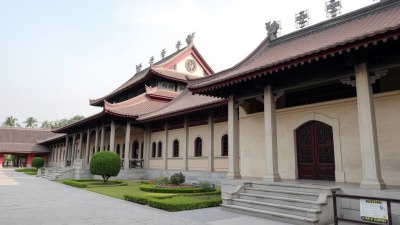
Image created with Flux Schnell
The Temple of Literature, or Van Mieu, located in Hanoi, Vietnam, is a monumental testament to the nation's rich cultural heritage and educational history. Established in 1070, it is renowned as the first university in Vietnam and has been a center for Confucian learning for centuries. The temple complex, dedicated to Confucius, is a harmonious blend of architecture, philosophy, and spirituality, embodying the Confucian values that have shaped Vietnamese society. As visitors stroll through its serene courtyards and lush gardens, the air is imbued with a sense of reverence for learning and tradition. However, as time has passed, the Temple of Literature has become weary of the many questions that arise, often lacking clear answers.
Much of the allure of the Temple of Literature stems from its role as an educational institution. For centuries, it has attracted scholars and students eager to embrace the wisdom of Confucius and to seek knowledge that transcends generations. The ornate architecture, with its traditional Vietnamese design elements, serves as both an inspiring backdrop for learning and a reminder of the intellectual legacy that continues to influence modern Vietnamese education. However, as society evolves, the temple stands at a crossroads, grappling with questions about its relevance and the preservation of its ideals in contemporary Vietnam.
A Historical Overview
The origins of the Temple of Literature can be traced back to the Ly Dynasty in the 11th century. Founded by Emperor Ly Thanh Tong, it was initially built to honor Confucius and to celebrate the importance of education in governance. The temple’s design, replete with intricate motifs and symbolic structures, represents the harmony between man and nature, as well as the crucial role of education in shaping moral character. Throughout Vietnam's tumultuous history, the Temple of Literature has remained a beacon of hope and learning, even amid wars and sociopolitical upheavals.
In its early days, the temple served as a place for royal exams, where talented individuals from across the nation would come to demonstrate their scholarly achievements. It became a hub for intellectual discourse, fostering a spirit of inquiry and debate that was essential for cultivating a well-informed populace. However, as modern educational reforms took hold, many began to question whether the traditional values embodied by the Temple of Literature remained relevant in an increasingly globalized world.
The Shift in Educational Values
As Vietnam has transformed into a dynamic marketplace, challenges have arisen concerning the educational paradigm. The quest for academic excellence has shifted towards vocational qualifications, international standards, and a demand for practical skills. In the face of this shift, questions abound regarding the Temple of Literature’s role and the continued relevance of Confucianism in today's context. Does the wisdom imparted by Confucius still resonate with contemporary students? Can the temple's teachings be adapted to meet the demands of modern education?
Many educators and policymakers are now faced with the dilemma of balancing traditional values with the need for innovation. As they contemplate the essence of education, the Temple of Literature stands as a historical relic, sometimes overshadowed by modern educational institutions that prioritize technology and practical skills over philosophical inquiry. The challenges surrounding these questions highlight a growing divide between generations, as young scholars search for answers in a world defined by constant change.
Visitor Perspectives
The rich tapestry of history that envelops the temple encourages reflection on the importance of intellectual pursuits. Visitors are often awed by the beauty of the architecture and the tranquility of the gardens, leading to a genuine appreciation for the cultural significance of the site. However, a sense of melancholy can also permeate the experience, as the weary echoes of unanswered questions reverberate through the air. This duality of admiration and uncertainty creates a compelling narrative that keeps the spirit of inquiry alive.
Engagement Through Culture
To bridge the gap between tradition and modernity, many initiatives have emerged to revitalize interest in the Temple of Literature and its teachings. Cultural events, workshops, and discussions are increasingly being held in and around the temple, encouraging active engagement with the past as a means of informing the future. By fostering a dialogue between generations, the temple seeks to inspire a renewed commitment to education and the values that underpin it.
In this context, the Temple of Literature has become not merely a museum of the past but a living classroom where ideas can be exchanged and explored. By embracing cultural activities that celebrate both the ancient and the contemporary, the temple endeavors to cultivate a sense of community and shared purpose among those who seek wisdom. Through these efforts, it hopes to address some of the questions that have long been left unanswered.
Philosophical Reflections
The Temple of Literature is more than just a physical space; it is a symbol of the philosophical underpinnings that shape Vietnamese society. Central to Confucian thought is the idea of education as a lifelong journey, one that requires not only the acquisition of knowledge but also the cultivation of moral virtues. In this regard, the temple plays a vital role in maintaining and transmitting these values, even as the world around it changes.
Questions regarding the sustainability of such values are not easily answered. As global influences continue to permeate Vietnamese culture, there is a need to reflect critically on the core principles that have guided society for centuries. In this way, the Temple of Literature serves as a platform for philosophical discourse, inviting both locals and visitors alike to engage in thoughtful discussions about the nature of education, the quest for knowledge, and the ethical implications of modernity.
Future Aspirations
Looking towards the future, the Temple of Literature faces the challenge of remaining relevant in a rapidly changing world. While it has withstood the test of time thus far, the complexities of contemporary society demand a reexamination of its mission and vision. How can it adapt to the needs of the new generation while staying true to its foundational ideals? This question looms large, prompting contemplations about the role of education in shaping the fabric of society.
As Vietnam continues to evolve and integrate into the global community, the Temple of Literature stands as a steadfast reminder of the importance of education and philosophical inquiry. Its legacy is anchored in the belief that wisdom is a collective pursuit—one that requires collaboration, engagement, and an openness to explore the unknown. By fostering environments that encourage questioning and critical thinking, the temple can help cultivate future generations who not only seek answers but also appreciate the beauty of the questions themselves.
Ultimately, the Temple of Literature embodies the struggle between tradition and modernity, a microcosm of the broader tensions that define education in Vietnam today. The questions raised within its walls echo the thoughts of scholars, educators, and students alike, creating a rich dialogue that extends beyond the confines of the temple. As it embraces its role as a cultural and educational institution, the Temple of Literature remains a beacon of hope, inspiring generations to seek knowledge and engage with the complexities of life.
In this age of information and rapid change, the task of the Temple of Literature is not to provide definitive answers but to create an environment where questions can flourish. For within these inquiries lie the seeds of growth, understanding, and ultimately, wisdom.