Wandering Through Fiction With Only a Real Map in Hand
Explore the intersection of reality and fiction through the lens of maps and storytelling.
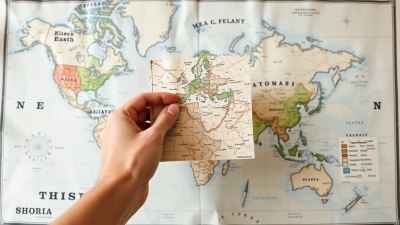
Image created with Flux Schnell
Maps, in their essence, represent more than just geography; they encapsulate history, culture, and stories waiting to be uncovered. They are tools for navigation but can also serve as gateways to fictional worlds. This article delves into the fascinating concept of exploring narratives through maps, encouraging a philosophical journey where real-world mapping meets the realm of fiction.
The Power of Maps
Maps have been created for thousands of years, evolving alongside civilization itself. They plot out territories, outline routes, and mark significant landmarks. Beyond their practical uses, maps hold an intrinsic value in storytelling. They provide a visual representation of worlds that readers and explorers can immerse themselves in.
Real Maps in Fictional Landscapes
Many beloved literary works come with maps that enrich the reader's experience. They allow individuals to visualize the narrative's journey, making fictional spaces more tangible. J.R.R. Tolkien's Middle-earth is a prime example; his map offers a detailed look at the lands traversed by hobbits, elves, and men, making the epic quest feel vibrant and alive. Readers can trace the rugged terrains from the Shire to Mordor, engaging their imagination more deeply.
Mapping the Imagination
The intersection of geography and fiction does not merely serve the reader; it challenges the cartographer as well. When an author creates an imaginary world, they become a cartographer in their own right, plotting out a landscape fueled by creativity. The process involves not just geographical awareness but understanding of political landscapes, cultures, and ecosystems as well.
Real World Explorations
When we step outside and explore our geographical terrains with a real map, we engage in a unique interplay between reality and imagination. By navigating through real-world locations, we cultivate a deeper understanding of narrative spaces. Consider venturing to places that inspired famous authors or locations described in novels; each expedition is akin to turning the pages of a lived story.
Literary Drama in Real Places
Imagine trekking through the Lake District in England, the celebrated muse for poets like William Wordsworth and Beatrix Potter. Each hill, lake, and valley narrates their stories, framing the balance between nature's beauty and human emotion. Similarly, visiting the underbelly of Paris can evoke the spirited narratives of expats and thinkers in Hemingway’s “A Moveable Feast,” reifying the literary implications of physical locations.
The Analog and the Digital
In our modern age, the advent of digital maps has transformed our explorations. Apps like Google Maps and augmented reality experiences allow us to traverse lengths we’ve only previously known through description. However, there remains a unique charm in holding a physical map, feeling its texture, and tracing your journey with a finger—each crease representing a unique potential adventure.
Building Your Literary Map
Readers can create their maps of literary journeys by compiling stories, illustrating emotions, and locating real-life counterparts. What fictional settings have resonated most deeply with you? Where would you plot a treasure map of emotion or experience? You might find that your personal mapping reflects the depth of your reading life.
Place and Identity in Fiction
Place is not just a backdrop for narratives; it shapes characters and plots in profound ways. In “The Great Gatsby,” F. Scott Fitzgerald capitalizes on the geography of the Jazz Age, where the divide between East and West Egg represents themes of class and aspiration. Similarly, John Steinbeck’s “East of Eden” utilizes the Salinas Valley not merely as a setting but as a character that influences the narrative arc.
The Importance of Accurate Representations
When navigating through fiction with a real map, it’s essential to note that the map must embody not just physical traits but also cultural narratives accurately. Misrepresentation can lead to misunderstanding narratives profoundly tied to specific geographies. Therefore, cartographers of both real and fictional realms bear a responsibility to honor their subjects faithfully.
Maps as Analytical Tools
The potential of maps extends into literary analysis. Scholars often utilize geographical tools to dissect narrative structures and character developments. By mapping out character journeys, interactions, and settings, readers and analysts reveal patterns, themes, and the overall significance of space in storytelling. This practice uncovers layers within texts that give rise to richer interpretations.
Fictional Lands That Have Real Roots
Fictional worlds often have roots in our reality. C.S. Lewis’s Narnia was inspired by his own experiences, including the English countryside, while the streets of Hogwarts can be traced back to the architecture and cities of the British Isles. Authors frequently draw substitutional parallels between their worlds and real-world places, thus enriching their narrative with familiarity and imagination.
The Cartographer’s Quest
Whether it’s a literary map hanging in a classroom or a detailed atlas in a traveler’s backpack, the art of mapping offers endless possibilities. It represents a quest to understand the world and our place in it. For those who cherish stories, it is a journey of discovery, an exploration of intersections between the known and the imagined.
Pursuing an Interactive Experience
As readers, we are encouraged to tap into interactive experiences while engaging with literature. Guided literary tours, for instance, offer a way to walk in the footsteps of beloved characters or authors. By stepping into spaces that inspired art and literature, we create profound connections with what we read. We find ourselves rooted in the fiction we cherish.
To wander through fiction with only a real map is to straddle two worlds—one of narrative imagination and the other of tangible reality. It encourages exploration of both landscapes, crafting meaningful journeys through literature while honing a deep appreciation for both geography and storytelling. It is an endeavor that enriches the soul, inviting readers to detach from their everyday lives and venture into the boundless realms of creativity.