Where Palms Drown and Coral Bleaches in Tuvalu
Explore Tuvalu's unique environmental challenges, including palm drownings and coral bleaching.
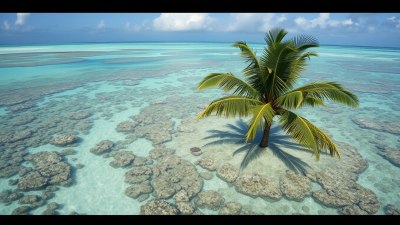
Image created with Flux Schnell
Tuvalu, a small island nation in the Pacific Ocean, faces some of the most immediate and pressing challenges due to climate change. As global temperatures rise and sea levels increase, the delicate balance of Tuvalu’s ecosystems is being disrupted. This article delves into the phenomenon of palm drownings and coral bleaching, examining how these environmental issues affect not only the landscape but also the livelihoods of Tuvalu's inhabitants.
Significantly composed of reef islands and atolls, Tuvalu's geographical structure makes it particularly vulnerable to the adverse effects of climate change. Rising sea levels can not only lead to the flooding of land but also affect the freshwater resources that the population relies heavily upon. Palms, a staple vegetation in Tuvalu, are particularly susceptible to this change. As saltwater intrudes into fresh-water aquifers, palms begin to drown; their roots can no longer absorb the needed freshwater, leading to a decline in their health and growth.
The phenomenon of palm drownings does not occur in isolation. It reflects a broader narrative of environmental degradation exacerbated by climate change. The palm trees are not just important for their aesthetic appeal; they are integral to the culture and daily life of Tuvaluans, offering shade, material for traditional crafts, and even food resources. As these palms die off, communities experience shifts in their environment and resources, forcing adaptations that are costly, both financially and culturally.
Additionally, coral reefs, which surround the islands, are facing severe stress due to rising ocean temperatures and acidification. Coral bleaching occurs when corals expel the algae (zooxanthellae) that live within their tissues. This leads to a loss of color and an inability for corals to gain the energy they need to survive. The implications of coral bleaching extend far beyond a simple loss of aesthetic beauty; Tuvalu relies on its reefs for fisheries, tourism, and the overall health of the marine ecosystem.
The coral reefs around Tuvalu have been experiencing significant bleaching events, with projections indicating that these occurrences will only intensify without meaningful global action. A healthy coral reef is vital not only for marine biodiversity but also for the health of the residents of Tuvalu, whose livelihoods depend directly on the resources provided by these ecosystems.
The Impact on Lifestyle and Culture
The interlinking crises of palm drownings and coral bleaching result in profound socio-economic consequences, altering the fabric of Tuvaluan life. Traditional fishing practices are impacted as coral reefs degrade, reducing fish populations and altering species compositions. This impacts food security and local economies that depend on fishing. Communities may struggle to find enough fish, forcing residents to turn to imported foods that may not only be pricier but also less nutritious.
Furthermore, the loss of palm trees contributes to a loss of cultural identity. The palms are more than just trees; they feature prominently in the cultural practices, stories, and lives of the people of Tuvalu. The decline of these trees can lead to the erosion of cultural practices that have been passed down through generations.
Education and the passing down of traditional knowledge become crucial in times like this. Community leaders and educators are working towards integrated models wherein traditional ecological knowledge is used alongside contemporary climate science to adapt to the changing environment. It is increasingly important for the collective voice of the Tuvaluan people to be heard in international forums that deal with climate action and environmental protection.
Challenges Ahead
Current projections regarding climate impacts in Tuvalu paint a grim picture. By 2050, experts predict that one-third of Tuvalu could be underwater if significant global action is not taken to reduce greenhouse gas emissions. This impending reality raises questions about the future of this island nation and its inhabitants. Displacement and migration may become an unfortunate necessity for many Tuvaluans, as residents could be forced to leave their homes and seek refuge elsewhere. Population migration poses its own set of challenges, as it includes the loss of community, culture, and identity.
The Tuvaluan government has been proactive in seeking international aid and implementing local adaptation strategies to enhance the resilience of the islands. Initiatives include raising awareness, promoting renewable energy sources, and engaging in reforestation projects to combat both palm drownings and the coral bleaching figureheads of climate change impacts.
Efforts towards building resilient infrastructure are also key. By investing in better drainage systems, stronger seawalls, and sustainable land management practices, Tuvalu is calling for collaborative global efforts to ensure that not only do they have the means to adapt but that they can also thrive even in adverse conditions.
The Role of Global Awareness
This narrative urges the global community to pay attention to the plight of Tuvalu and similar nations. A small island nation may seem insignificant in the grand scheme of global politics, however, Tuvalu serves as an important case study highlighting the interconnectedness of climate change and human lives. The fight for Tuvalu isn’t just about the palm trees or the corals; it concerns everyone in the sense of how climate change—fueled by activities far removed from these islands—affects vulnerable populations worldwide.
Moreover, awareness of these challenges can drive changes in public policy, encourage investment in sustainable practices, and inspire grassroots activism aimed at action against climate change. It’s essential that individuals, corporations, and governments recognize their roles in combating climate change and reach global agreements that favor the protection and preservation of at-risk nations like Tuvalu.
In summary, Tuvalu stands at a critical juncture where palm drownings and coral bleaching are emblematic of broader environmental issues caused primarily by climate change. The survival of this small island nation and its rich cultural heritage depends significantly on immediate action taken both locally and globally. As we navigate through the 21st century, raising awareness and fostering community resilience can impart change. Together, we can work towards innovative solutions to take on the climate crisis and to safeguard not just the peoples of Tuvalu, but the entire planet for future generations.