The Statue of Unity in India Wonders Who Will Remember It in a Century
Explore the significance and legacy of the Statue of Unity in India and ponder its future relevance.
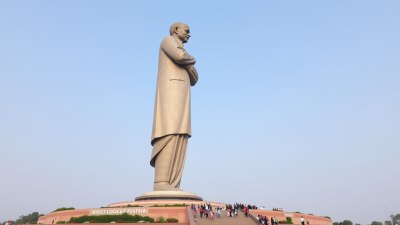
Image created with Flux Schnell
The Statue of Unity, located in the state of Gujarat, India, is the world's tallest statue, standing at a staggering height of 182 meters (597 feet). Inaugurated on October 31, 2018, this colossal statue honors Vallabhbhai Patel, an esteemed leader in India's struggle for independence and the first Deputy Prime Minister and Home Minister of India. This monument was envisioned as a tribute to Patel's contributions to the unity and integrity of the nation. Over the years, the statue has become a symbol of national pride and unity, representing the values Patel upheld. However, as we stand on the brink of a new century, questions arise regarding its legacy and who will remember this monumental figure and structure in the years to come.
When the statue was unveiled, it was met with a whirlwind of debate, discussion, and celebration. Supporters hailed it as a vital reminder of India's rich history and the importance of unity in a diverse nation. The statue also serves as a reminder of the vision Patel had for an integrated India, free from sectarian divides. Throughout the years, Patel worked tirelessly to integrate over 500 princely states into a unified nation after gaining independence in 1947. His efforts laid the foundation for the modern Indian state.
Beyond its symbolic representation, the Statue of Unity has become a massive tourist attraction. It draws millions of visitors from across the globe each year, eager to witness firsthand the immense scale and artistry of the monument. At the site, visitors can explore an exhibition gallery, a museum that chronicles Patel's life and achievements, and an observation deck that offers panoramic views of the surrounding area, including the Sardar Sarovar Dam and the Narmada River. This influx of tourism has had significant economic implications for the region, bringing jobs and funding to local businesses, possibly fuelling a sustainable growth model for the region.
The Symbolism Behind the Statue
However, what truly underpins the significance of the statue is its deep symbolism. Vallabhbhai Patel is revered as “Iron Man of India” for his strong leadership and commitment to national unity. The statue's formidable stature reflects this spirit of strength and resilience. As the statue gazes over the valley, it serves as a constant reminder of the challenges faced by the nation and the importance of collective memory. Various initiatives have been launched to promote this memory within educational institutions, ensuring that future generations understand Patel's impact on India's identity.
Yet, as we turn our gaze towards the horizon of the next century, it becomes critical to evaluate what this statue may signify for future generations. Will they cast their eyes upon it with reverence, knowing the remarkable stories of resilience it embodies? Or will it merely be an artifact shrouded in the dust of time? Much like various historical monuments across the globe, whose significance wanes with each passing generation, the Statue of Unity may face similar challenges. Although it currently stands tall amidst urban development and natural beauty, the collective memory of not only Patel but also the ideals he represented may slowly diminish.
Historical Context and National Identity
The construction of the statue is steeped in political significance. Commissioned by the Government of Gujarat and led by Chief Minister Vijay Rupani, the project gained momentum amid a broader agenda to foster nationalism in India. The portrayal of Patel as a unifying figure connects deeply with the narrative of Indian nationalism and the struggles for freedom. For many, he symbolizes the essence of modern India, and this statue serves as a focal point in exploring discussions around national identity.
Conversely, there are critiques around the statue’s location, funding, and the narrative it forges. Critics argue that the enormous funds allocated for the statue (over INR 3,000 crore, or around USD 430 million) could have been used to address pressing social issues like poverty, healthcare, and education. As the nation grapples with enormous challenges in these sectors, the juxtaposition of such grand projects raises ethical questions about the nature of memory and how we commemorate our past. People often debate whether a statue can genuinely encapsulate the spirit of a leader when compared to tangible changes in social conditions.
Future Generations and Collective Memory
In the context of collective memory, one must ponder on the role of modern technology and how it redefines our memorials. As future generations engage with content via social media, video games, and virtual realities, will they view the Statue of Unity through a digital lens? The challenge will be to create interactive experiences that allow future youth to connect with Patel's legacy and appreciate the statue's historical significance. This could be done through augmented reality tours or engaging applications that educate users about the intricacies of Patel’s contributions while enriching their understanding of India's intricate past.
Moreover, educational institutions play a vital role in shaping collective memory. It will be imperative to integrate Patel's philosophy and the essence of unity into the curriculum. Schools and colleges can create programs that not only recount Patel's life but also allow students to engage in discussions about unity in diversity, something that Patel championed. The emphasis on values learned from the past can empower students and ensure that the ideals represented by the statue endure over time.
A Multifaceted Legacy
As the world evolves with rapid changes influenced by politics, economics, and technology, it is essential to keep these discussions alive. The legacy of the Statue of Unity is multifaceted. While it stands as a physical symbol of unity, it prompts reflections on what unity means in a diverse nation like India. How the monument adapts to societal shifts over the next century will determine its enduring significance. The value of the statue should not merely rest on its size but also on its ability to foster dialogue about unity and integrity through education, community engagements, and public discourse.
Decades from now, as we step into an era characterized by advanced technologies and globalization, will we look back at the Statue of Unity as a relic of a bygone era or as a beacon guiding us toward collective progress? Only time will tell. However, the onus lies on current generations to cultivate understanding around Patel’s principles and the resonance these principles hold in contemporary society. Articulating these narratives will enrich the future of national identity and foster a sense of unity that Patel envisioned. The future may seem uncertain, but as long as history books include Patel's contributions and as long as celebrations honoring unity occur, the statue's significance may be preserved.
Embracing Legacy
As we traverse the landscapes shaped by historical figures, the lessons learned must influence the paths we choose moving forward. The Statue of Unity is more than just an impressive monument; it embodies the ideals of a great leader dedicated to fostering unity amid diversity. To ensure that its memory is not lost to the sands of time, we must actively engage with its narrative, intertwining it with contemporary dialogues about identity, nationalism, and inclusivity. The legacy may evolve, but our commitment to keeping the lessons alive will play a crucial role in determining who remembers it in a century. In revisiting Patel’s ethos, we take a step towards a better understanding of who we are as a nation and who we aspire to be in the future.